

Recruitment by country
MenaWorkforce recruits candidates from across the MENA region and places them with employers in eight European countries. Choose a destination to see the workforce available and how a placement into it runs.
- Eight European destinations
- Seven industries served
- Documentation prepared per country
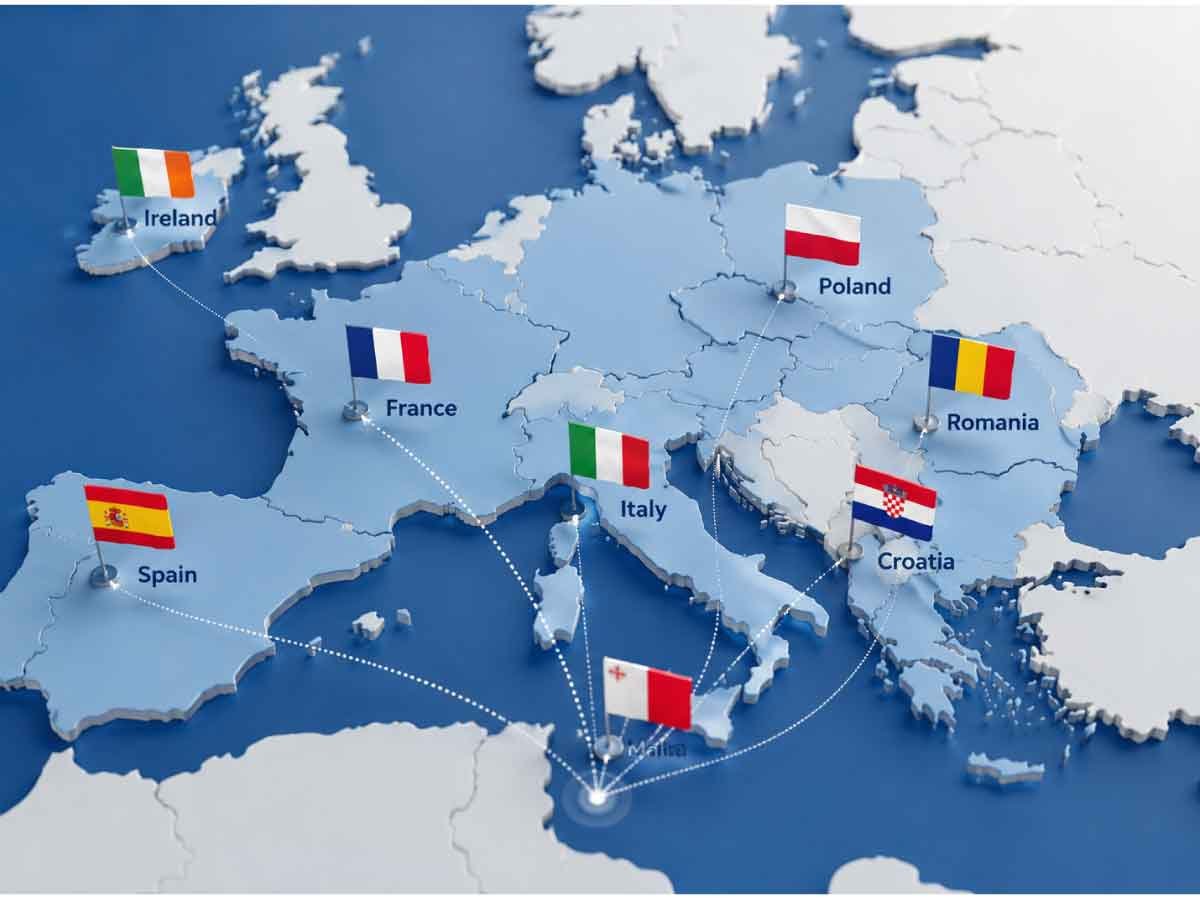
Recruitment destinations
Eight countries, each with its own sectors, hiring seasons and documentation. Every destination has a page setting out the workforce available there.
-
Workers in France
Agricultural, hospitality and construction workers placed with French employers, with French-speaking candidates from across the Maghreb.
-
Workers in Italy
Agricultural, hospitality and manufacturing workers for Italian employers, with short travel distances from North Africa.
-
Workers in Spain
Greenhouse, harvest and hospitality workers for Spanish employers, from the closest source region in the Mediterranean.
-
Workers in Poland
Production, warehouse and construction workers for Polish employers, recruited against shift patterns through the year.
-
Workers in Romania
Construction, manufacturing and agricultural workers for Romanian employers facing domestic labour shortages.
-
Workers in Croatia
Hospitality, construction and facilities workers for Croatian employers staffing a sharp Adriatic season.
-
Workers in Malta
Hospitality, construction, cleaning and care workers for Maltese employers, where English is an official language.
-
Workers in Ireland
Construction, food processing, hospitality and care workers for Irish employers, in an English-speaking labour market.
Why employers recruit internationally
Across all eight destinations the reasons are consistent: the roles are real, the domestic pool is short, and the timing cannot slip.
-
Roles the local market leaves open
Seasonal, site and shift work is where domestic shortages bite hardest, and where a brief goes unfilled longest.
-
Hiring against a fixed date
A harvest, a season opening or a project phase does not move. International recruitment is planned backwards from that date.
-
Volume without a scramble
One brief can cover a full team across several sites, instead of filling a rota one person at a time.
-
Compliance handled per country
Each destination asks for different documentation, and it is prepared as part of the placement rather than by your team.
-
Language matched to the site
Candidates are screened against the language your site actually works in, in any of five languages.
-
One process, eight destinations
An employer hiring into more than one country runs the same six steps in each, not a different arrangement per border.
Ready to start hiring?
Start with a brief: the roles you need, how many, and when you need them on site.